We “peek inside” a neural foundation model like a physiologist – mapping temporal response properties, encoding/decoding manifolds, and introducing a tubularity metric to assess biological plausibility.
We give an analytically solvable wavelet-basis parameterization of diffusion scores in terms of data moments, offering an architecture-agnostic view of what matters for denoising.
We show how learned traveling-wave recurrent dynamics can integrate global spatial context over time, yielding strong performance on tasks like semantic segmentation with fewer parameters than non-local baselines.
We introduce learned homomorphisms as a way to generalize the benefits of equivariant learning to broader, data-driven structure—bridging disentanglement, equivariance, and topographic organization.
We introduce LangevinFlow, a sequential VAE whose latent dynamics follow an underdamped Langevin equation, combining physics-inspired priors with strong performance on neural population modeling benchmarks.
We extend theory on “creativity” in convolutional diffusion models to the attention setting, predicting that attention promotes global self-consistency beyond patch-level mosaics.
Visualization of traveling waves found in the original Mamba architecture (left) and the variable velocity traveling waves we introduce in the Nu-Wave Mamba model (right). We see the variable velocity model learns exponentially faster and reaches lower error than the original counterpart.
Visualization of the phases of a network of locally coupled kuramoto oscillatos, driven by an input image (left), which converge in phase to segment the image into different shapes, with different oscillatory dynamics for each shape.
We propose a definition of artistic style that combines local texture with global symmetries and show that learned symmetries help predict movements and quantify stylistic similarity across artists.
A flow equivariant neural network will process a moving stimulus sequence the same way as it processes a static stimulus sequence, but with the same motion applied to its hidden state. To achieve this property for a specific input flow $\psi^{(\nu)}$, a corresponding flow must preemptively shift the hidden state before the input comes in (denoted by red arrows).
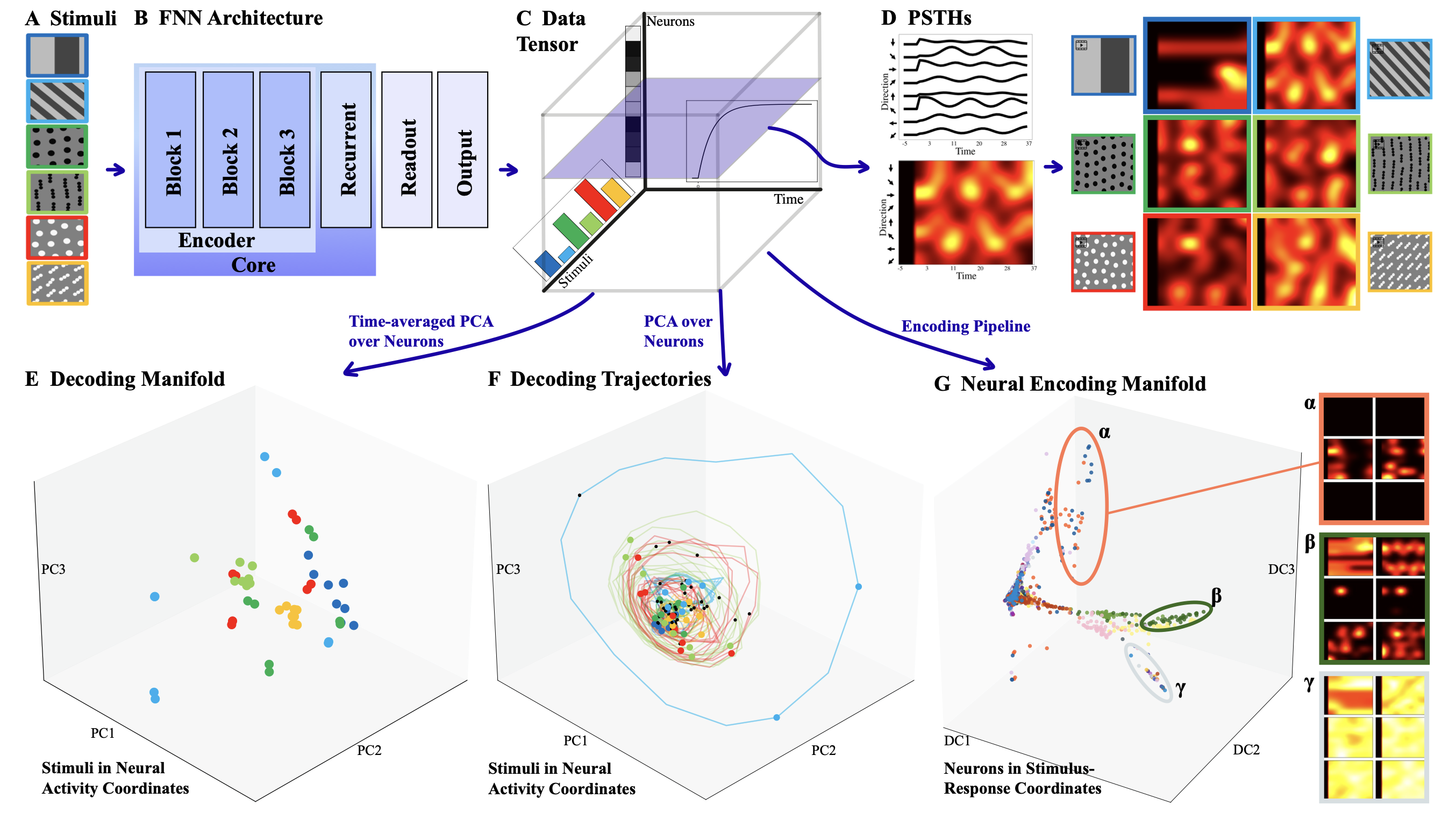 We “peek inside” a neural foundation model like a physiologist – mapping temporal response properties, encoding/decoding manifolds, and introducing a tubularity metric to assess biological plausibility.
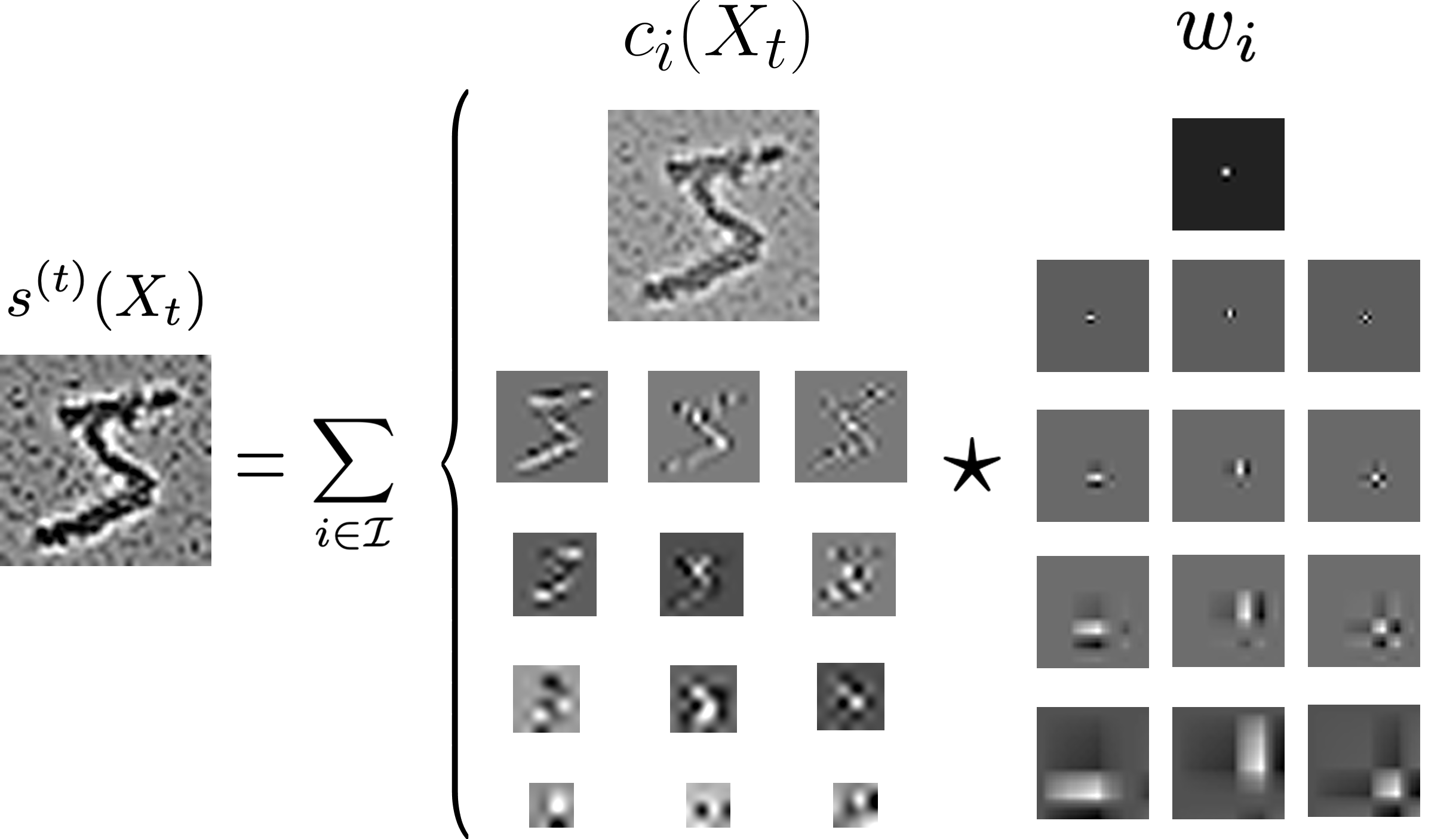 We give an analytically solvable wavelet-basis parameterization of diffusion scores in terms of data moments, offering an architecture-agnostic view of what matters for denoising.
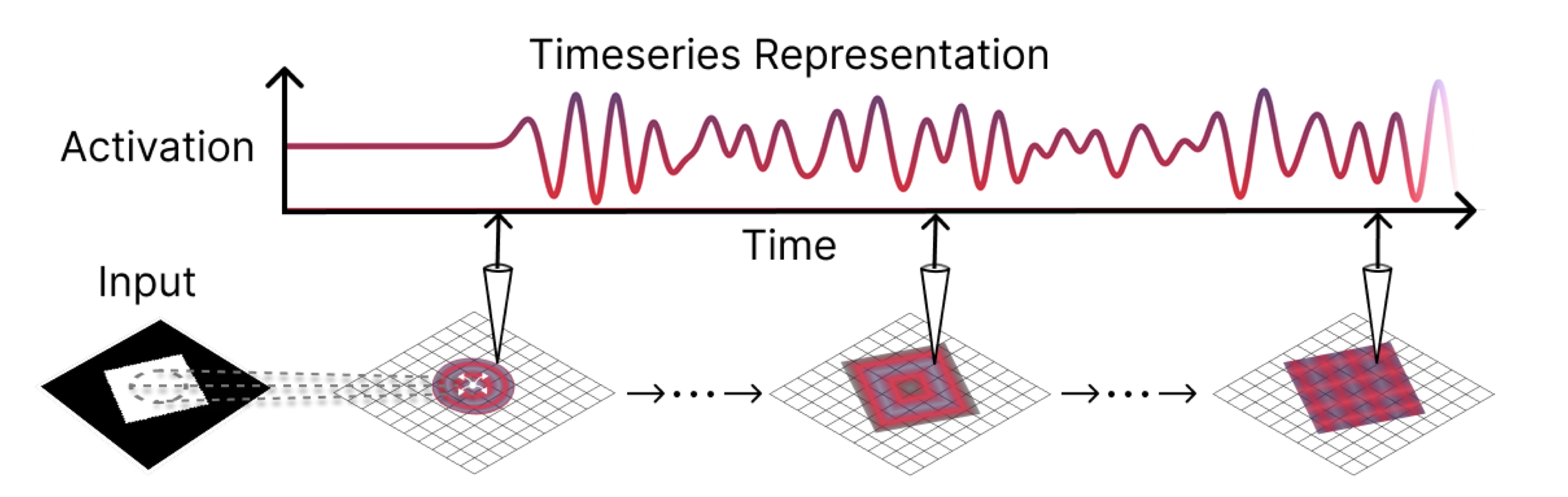 We show how learned traveling-wave recurrent dynamics can integrate global spatial context over time, yielding strong performance on tasks like semantic segmentation with fewer parameters than non-local baselines.
 We introduce learned homomorphisms as a way to generalize the benefits of equivariant learning to broader, data-driven structure—bridging disentanglement, equivariance, and topographic organization.
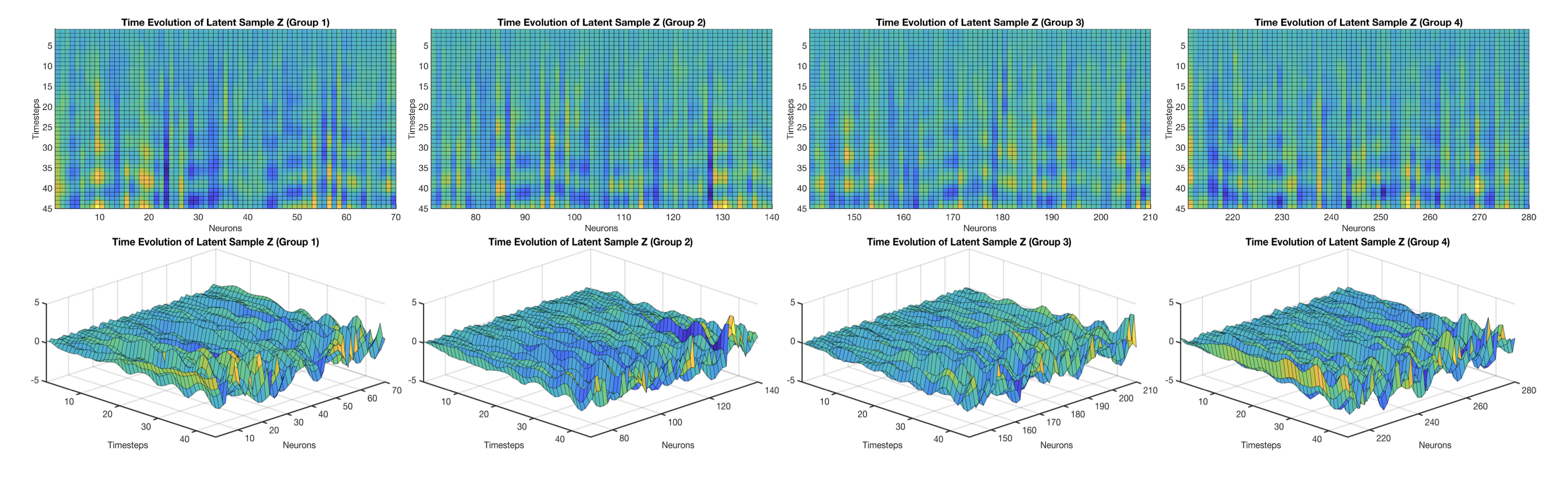 We introduce LangevinFlow, a sequential VAE whose latent dynamics follow an underdamped Langevin equation, combining physics-inspired priors with strong performance on neural population modeling benchmarks.
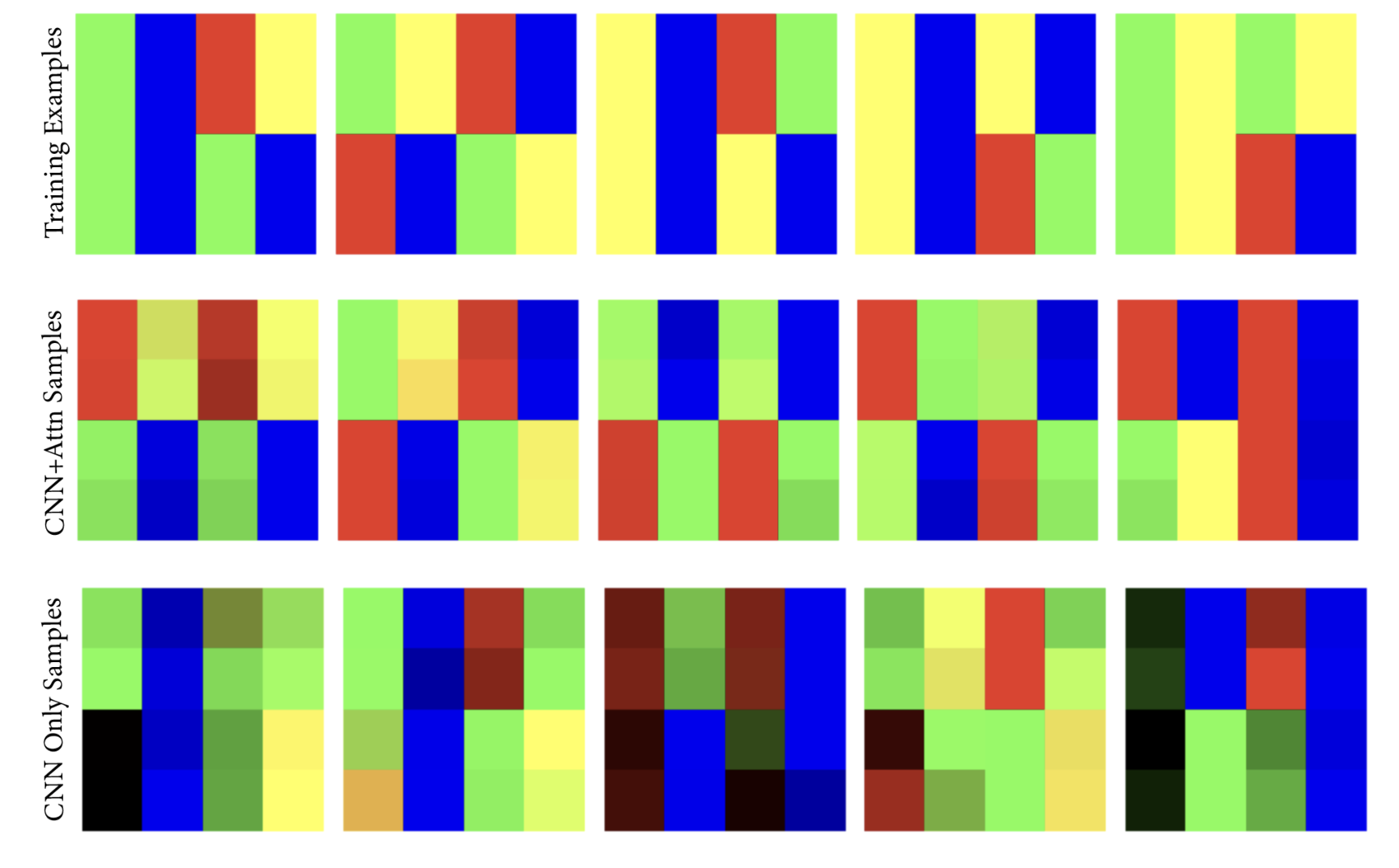 We extend theory on “creativity” in convolutional diffusion models to the attention setting, predicting that attention promotes global self-consistency beyond patch-level mosaics.
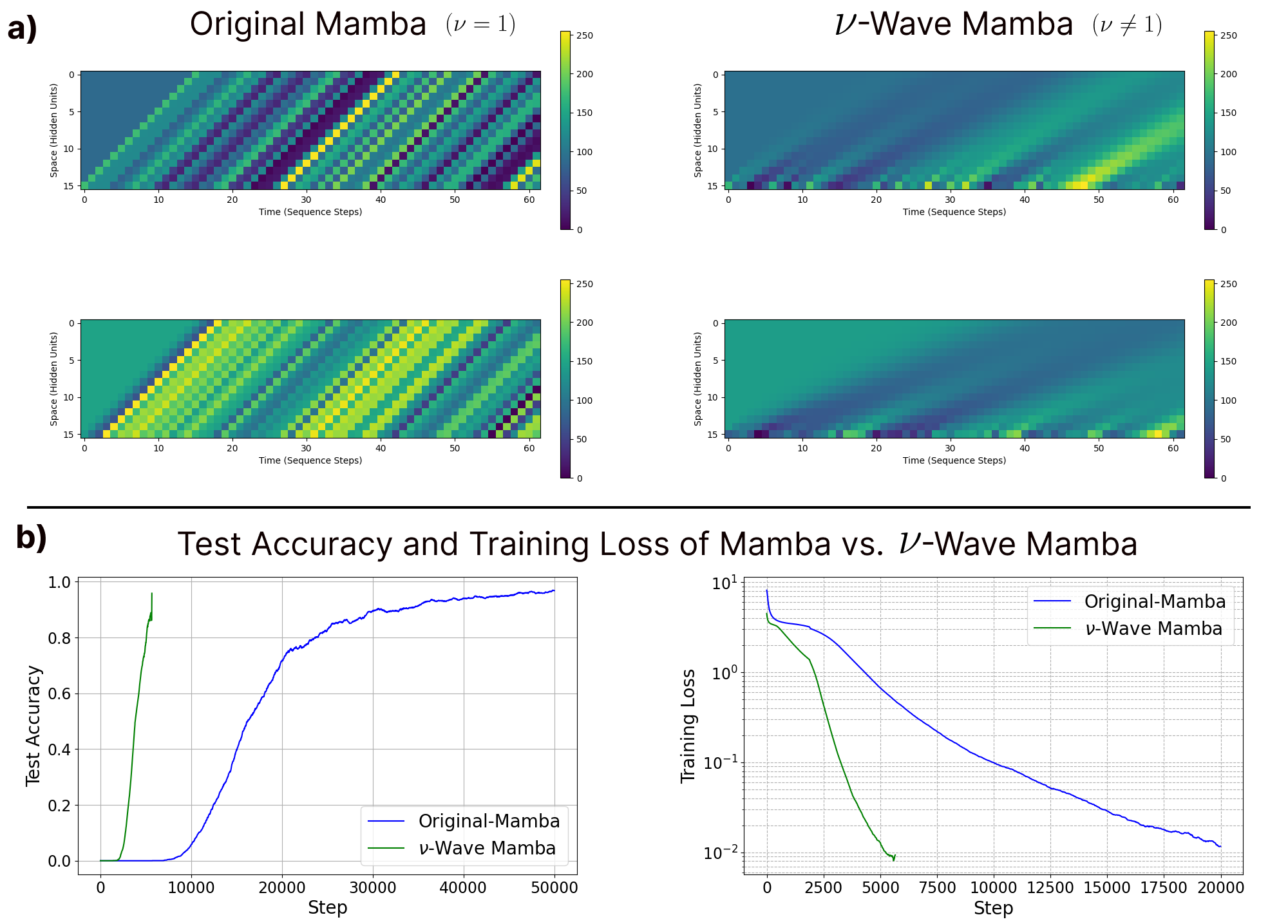 Visualization of traveling waves found in the original Mamba architecture (left) and the variable velocity traveling waves we introduce in the Nu-Wave Mamba model (right). We see the variable velocity model learns exponentially faster and reaches lower error than the original counterpart.
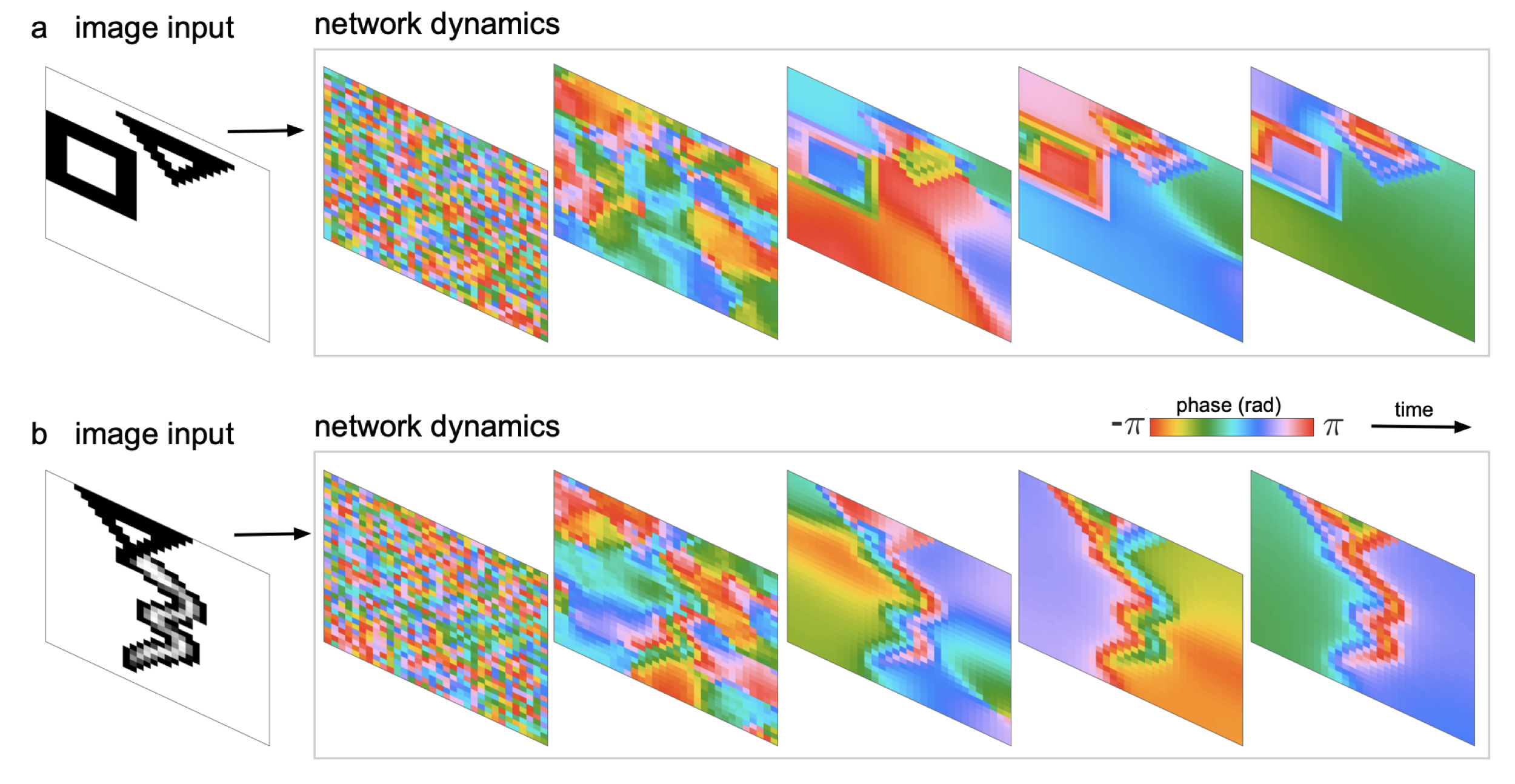 Visualization of the phases of a network of locally coupled kuramoto oscillatos, driven by an input image (left), which converge in phase to segment the image into different shapes, with different oscillatory dynamics for each shape.
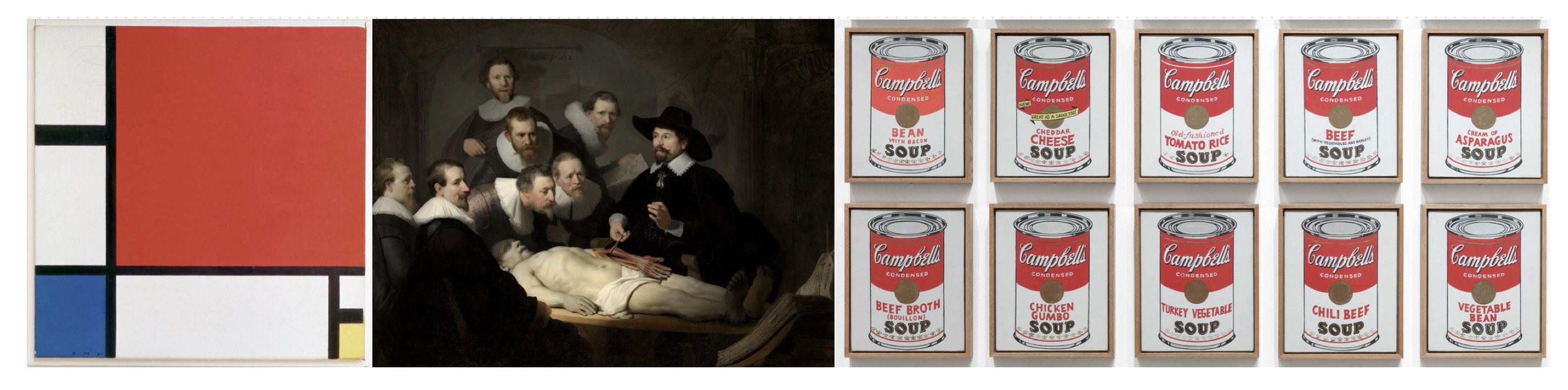 We propose a definition of artistic style that combines local texture with global symmetries and show that learned symmetries help predict movements and quantify stylistic similarity across artists.
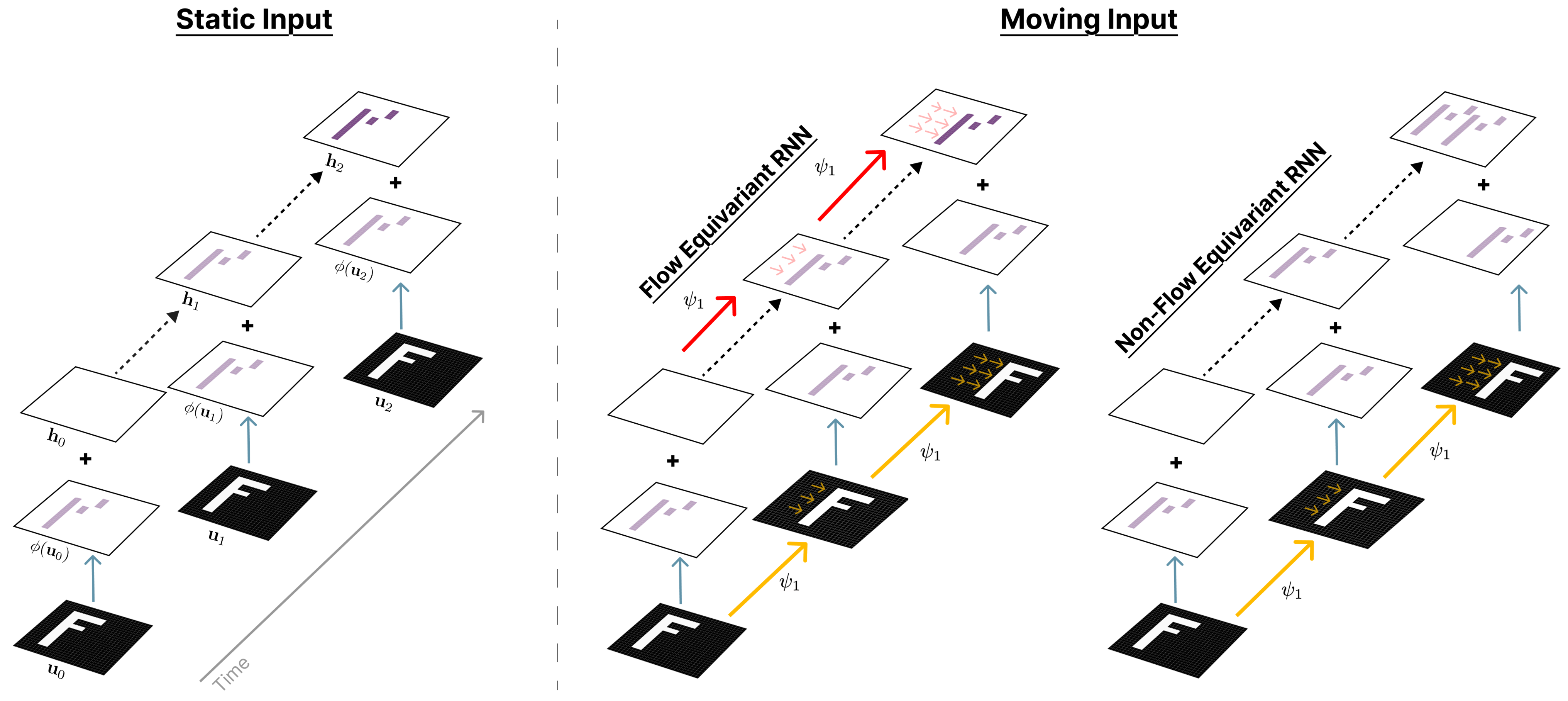 A flow equivariant neural network will process a moving stimulus sequence the same way as it processes a static stimulus sequence, but with the same motion applied to its hidden state. To achieve this property for a specific input flow $\psi^{(\nu)}$, a corresponding flow must preemptively shift the hidden state before the input comes in (denoted by red arrows).